


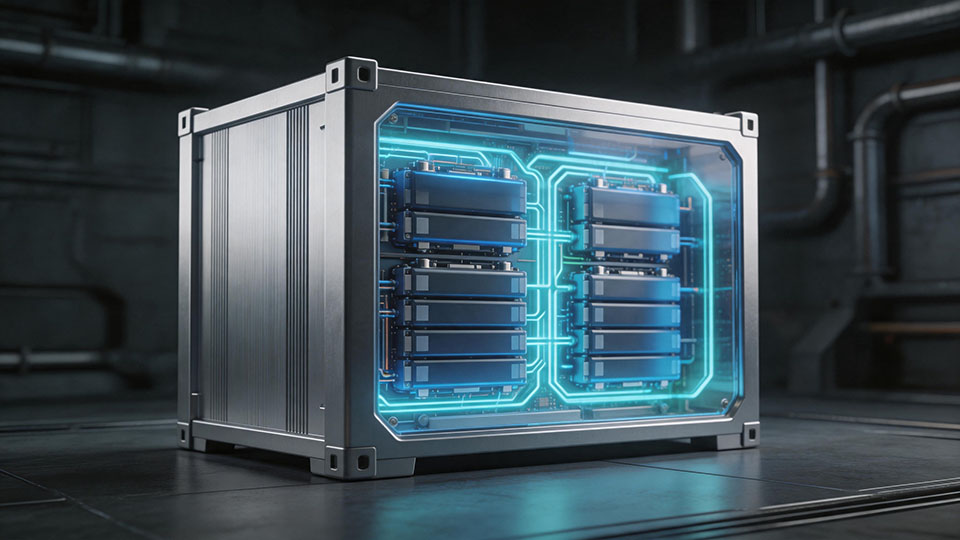
At B2B industrial trade shows, top-tier technological innovations often face an awkward predicament: they are completely encased within heavy metal shells.
Whether you are exhibiting a megawatt-level Battery Energy Storage System (BESS), a high-precision industrial chiller, or semiconductor cleanroom equipment, to the non-technical observer, they often just look like lifeless "metal cabinets" or "black boxes." Sales representatives are forced to point at cold exteriors, struggling to verbally explain the brilliant liquid cooling cycles or complex structural designs hidden inside—resulting in highly inefficient communication.
To break through this exhibition bottleneck, we must abandon traditional "exterior-only displays" and adopt a transparent, Phygital (physical + digital) strategy to make the core technological logic instantly visible.
1. Physical Cutaway Design: Breaking the Visual BarrierThe first step to solving the "black box" problem is physical transparency. When crafting high-fidelity scale models, precise cutaway designs replace sections of the enclosed metal casing with high-transmittance, anti-static acrylic. This acts as an "X-ray window" for your equipment, clearly revealing the dense internal battery modules, intricate piping layouts, and precision mechanical structures, directly showcasing your industrial design pedigree.
2. Static Light Tracing: Visualizing Invisible EngineeringThe hardest things to explain inside a machine are often invisible physical phenomena, such as thermal management pathways or electrical routing. By embedding precise lighting matrices within the physical model, we can visualize these abstract engineering concepts. For instance, using cyan (#06EBE4) and magenta (#F56FAC) LED light strips to statically trace the geometric pathways of the cooling circuits and high-temperature warning nodes. Attendees can instantly understand your safety architecture without reading dense specification sheets.
3. Screen Synchronization: Establishing Intuitive Control MappingA standalone physical model is still a one-way communication tool; true transformation comes from interaction. We integrate a control tablet next to the model, displaying a 3D interface that matches the physical unit 1:1. When a client taps a specific core component on the screen, the corresponding area inside the physical model instantly lights up. This immediate tactile feedback allows clients to independently verify the equipment's operational logic, massively boosting their confidence in the technology.
ConclusionClients only invest in technology they truly understand. By deeply integrating physical cutaways, structural lighting, and interactive control hubs, you can transform an obscure "black box" into an intuitive, three-dimensional technical manual, significantly lowering the explanation barrier for your front-line sales team.


