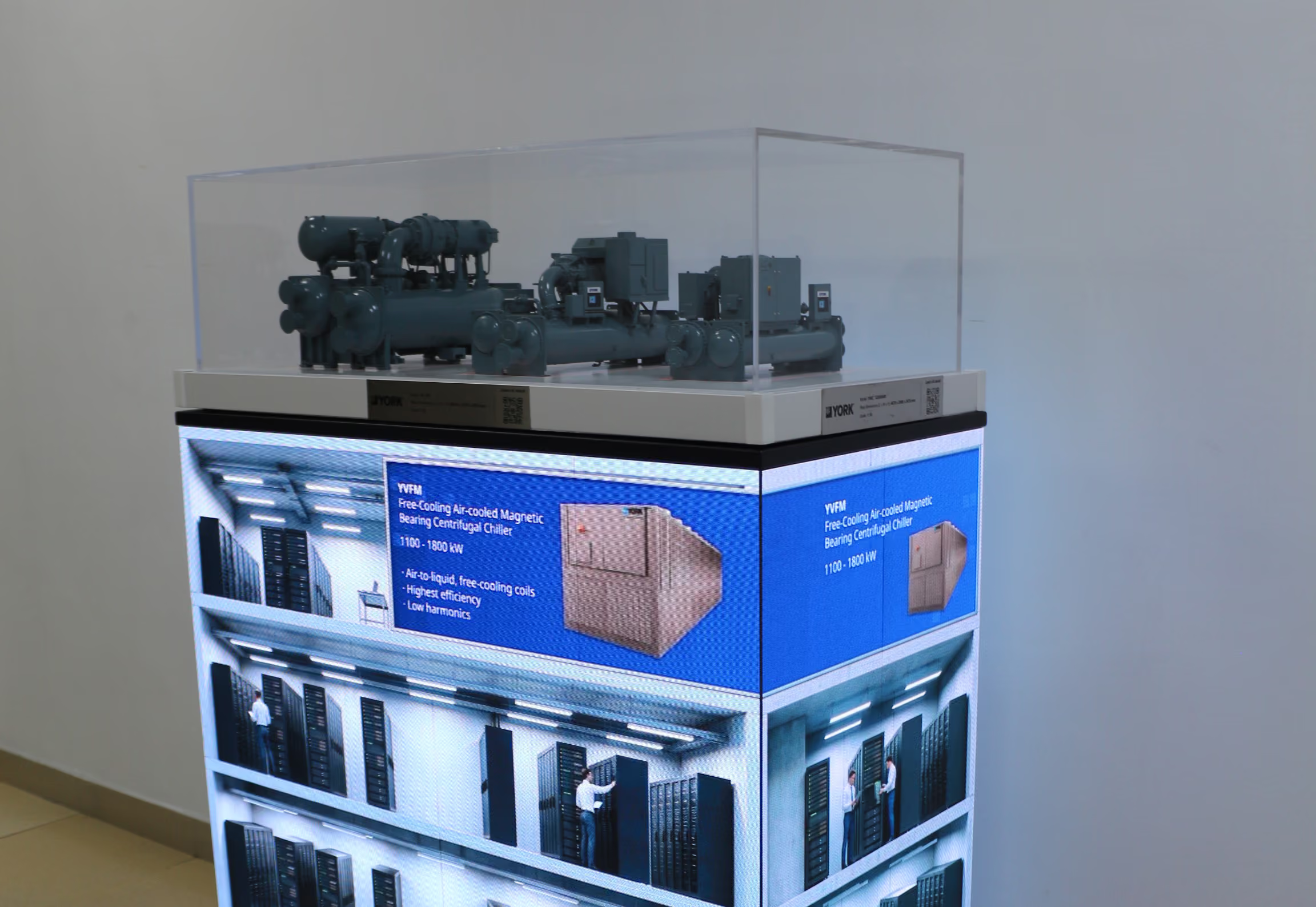
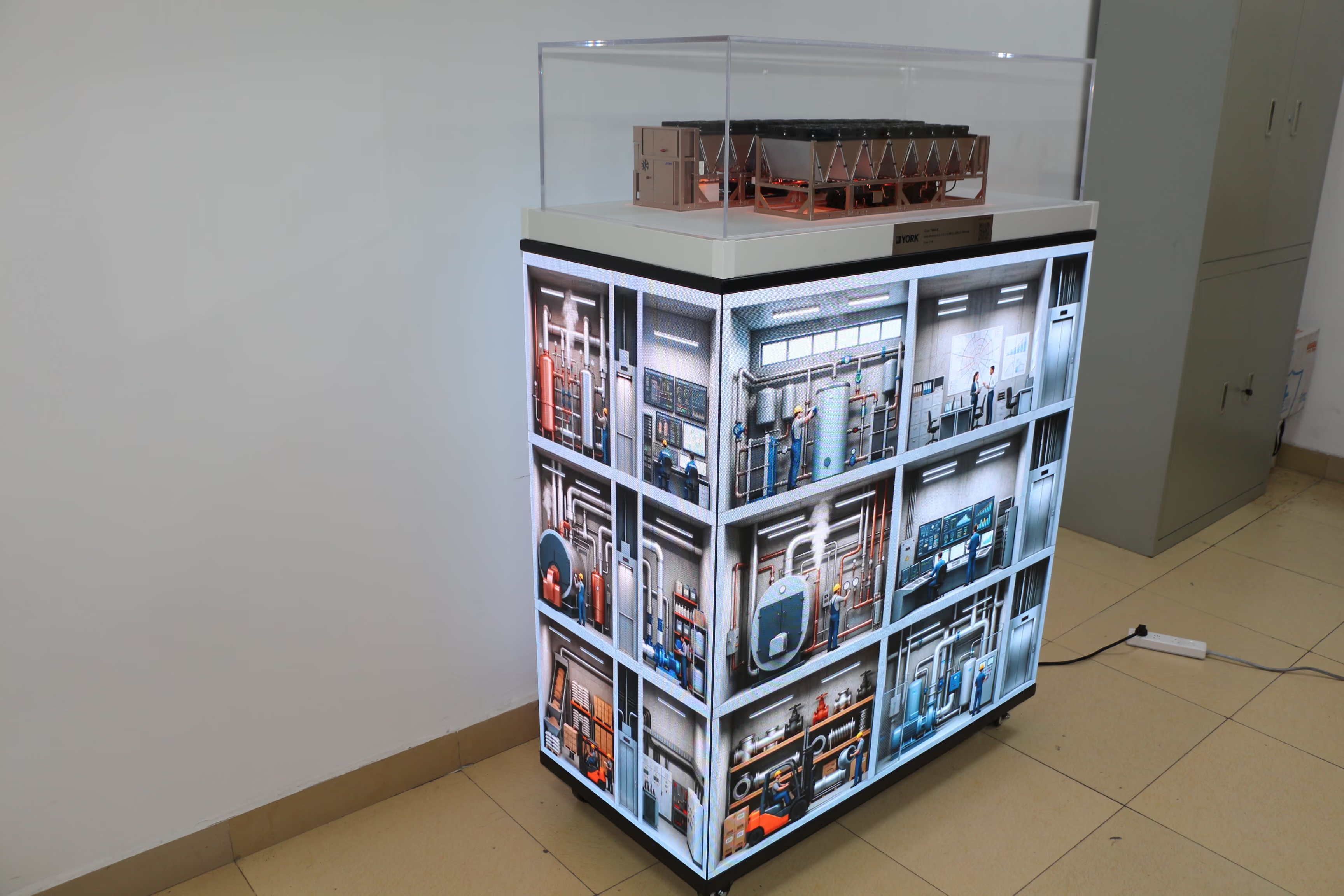
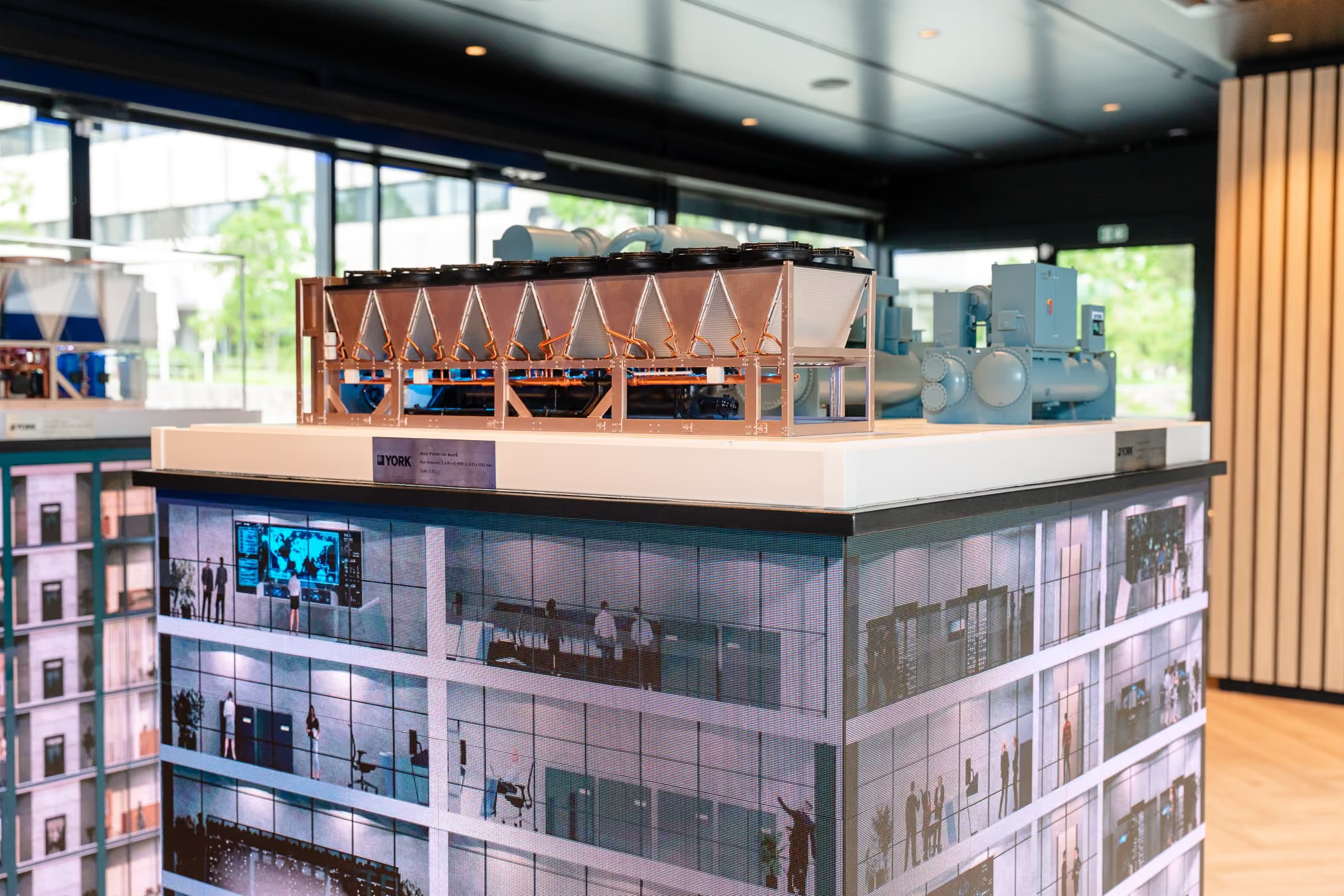
One Industrial Scale Model, Several Application Stories

An industrial product may be relevant to more than one type of facility. Its manufacturer may attend a data centre exhibition one month and a building technology event the next. The equipment displayed at both events could be the same, while the questions from visitors are quite different.
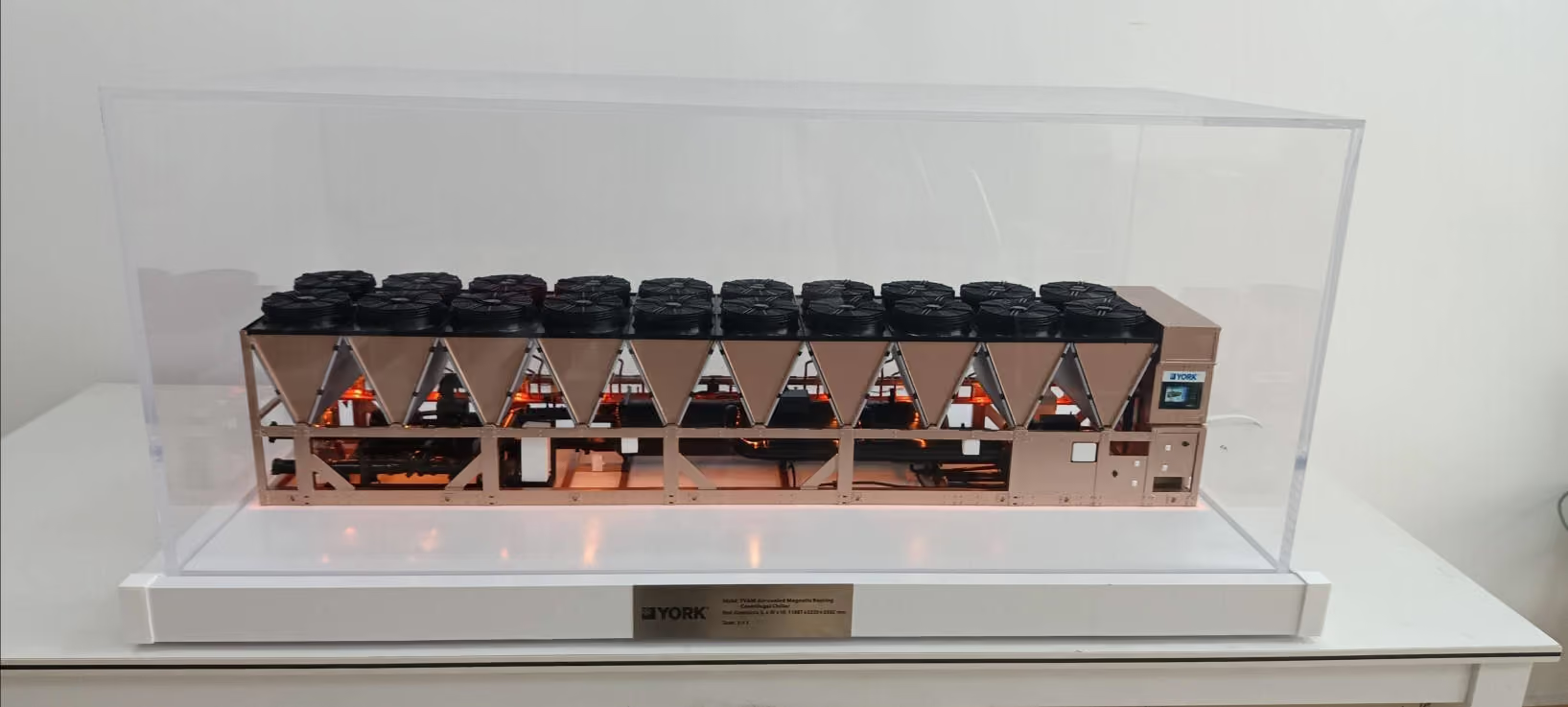
A physical scale model gives those visitors a consistent view of the product. An LED display beneath it offers room to explain the application that matters at a particular event.
This can make an exhibit more adaptable, but only when the different stories are based on real uses of the product. Changing the visual content should change the context of the explanation, not invent a new capability.
Keep the product facts consistent
The first decision is whether the same model genuinely represents the product being discussed in each application.
That may sound obvious, but visual content can create an impression quickly. If a screen shows a facility beneath a detailed equipment model, a visitor will reasonably assume that the equipment above belongs in that facility. The product team should confirm that relationship before the scene is produced or published.
The equipment’s visible form, configuration and accurately stated functions remain the fixed part of the story. If another application requires a different product configuration, the content needs to acknowledge that difference. A new background alone cannot turn one model into a faithful representation of another product.
Once those facts are clear, the team can decide what the screen needs to explain for each audience.
Change the context, not the equipment
Different visitors may look at the same equipment for different reasons. At one event, the discussion might begin with its place in a larger system. At another, visitors may want to understand the kind of building or process in which it operates.
The physical model can remain the reference point throughout. Screen content can then show the relevant setting and direct attention to a particular relationship: where the equipment sits, what surrounds it, or which part of the application is being discussed.
This approach gives the sales team a useful way to adapt its presentation. Instead of preparing a completely separate physical exhibit for every conversation, it can select content that supports the audience at hand—provided the model is still an accurate representation of the product.
The change should be meaningful. Replacing a hospital image with an office building image, for example, adds little if both sequences leave visitors asking the same question: “What does the equipment above have to do with this scene?”
Choose a small number of clear stories
A screen can store and play far more material than a visitor is likely to watch at an exhibition. That makes selection important.
For each event, it helps to decide which applications the intended audience is most likely to ask about. Each selected story should have a clear point: a product location, a system relationship, or a specific use that can be explained accurately. The sales team should be able to connect that point back to something visitors can see on the model.
Trying to include every possible market in one short playback loop may weaken the presentation. Visitors passing the booth often see only a few moments of content. A focused sequence gives them a better chance of recognising the subject and asking a useful question.
The same principle applies when screen content is changed for another event. The new material should be reviewed as part of the assembled exhibit. A video may look clear on a computer but feel disconnected when viewed below the physical model or from an angle beside the booth.
Prepare the stories with the people who will use them
Application content is more reliable when product, visual and sales teams each contribute what they know.
The product team can check whether a scene represents a valid application and whether the model matches the equipment being described. The visual team can make the relationship understandable on the screens. The sales team can identify the questions visitors actually ask and explain how the content will be used during conversations.
This does not require every visitor to watch a complete presentation. It gives the team a few well-prepared ways to start talking about the same product with different audiences.
What makes the exhibit reusable?
A four-sided LED base makes it possible to present different visual material, but the ability to change videos is only one part of reuse. The physical model must still suit the application. The content must remain accurate. And the assembled display must make sense to someone seeing it for the first time.
When those conditions are met, one model can support several application stories without asking the visitor to imagine the entire setting from a verbal explanation. The product stays in front of them; the surrounding story can be chosen to fit the conversation.